PCB Design · 2026
8051 MCU Development Board
A compact, custom 8051 board based on the STC89C52RC microcontroller for embedded systems development.
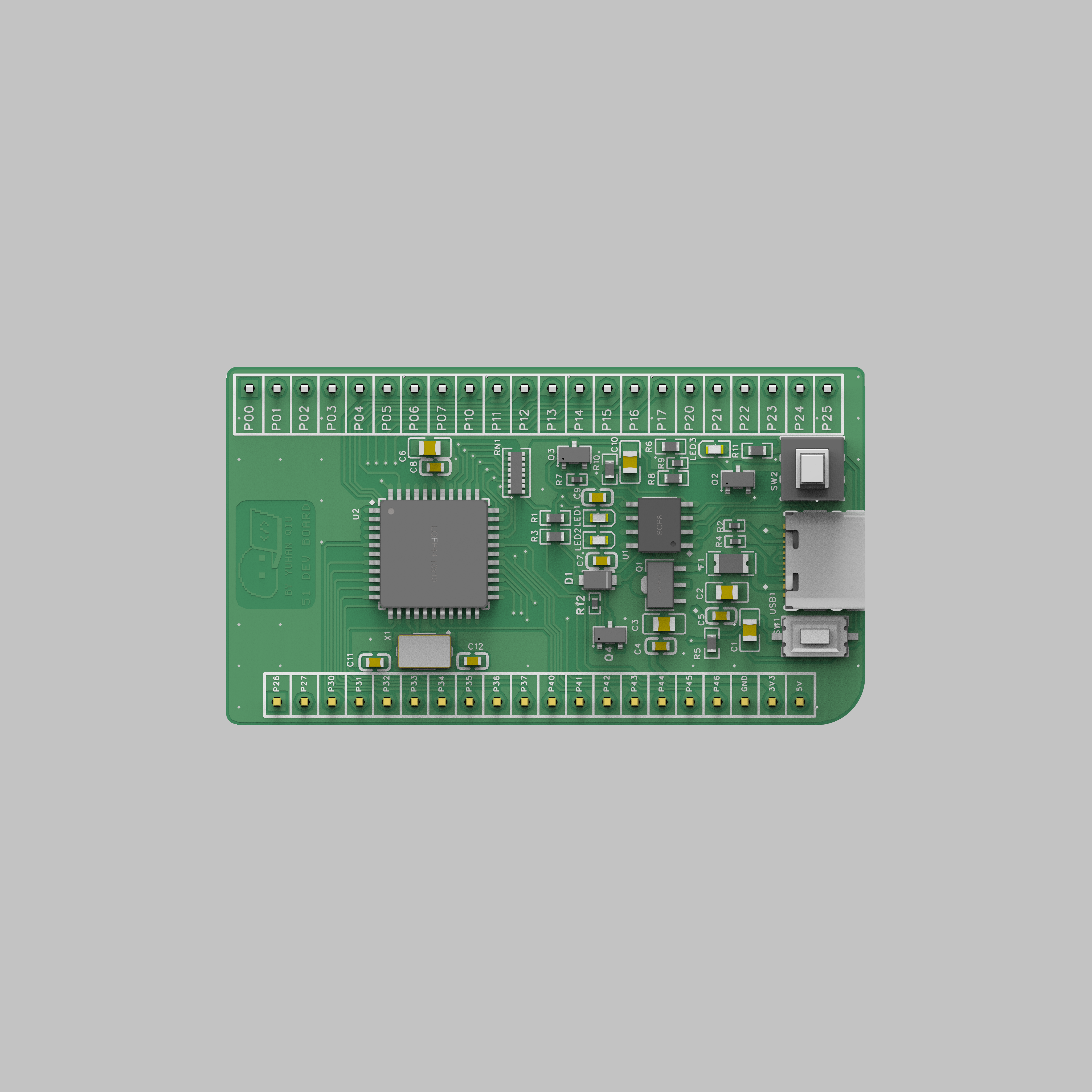
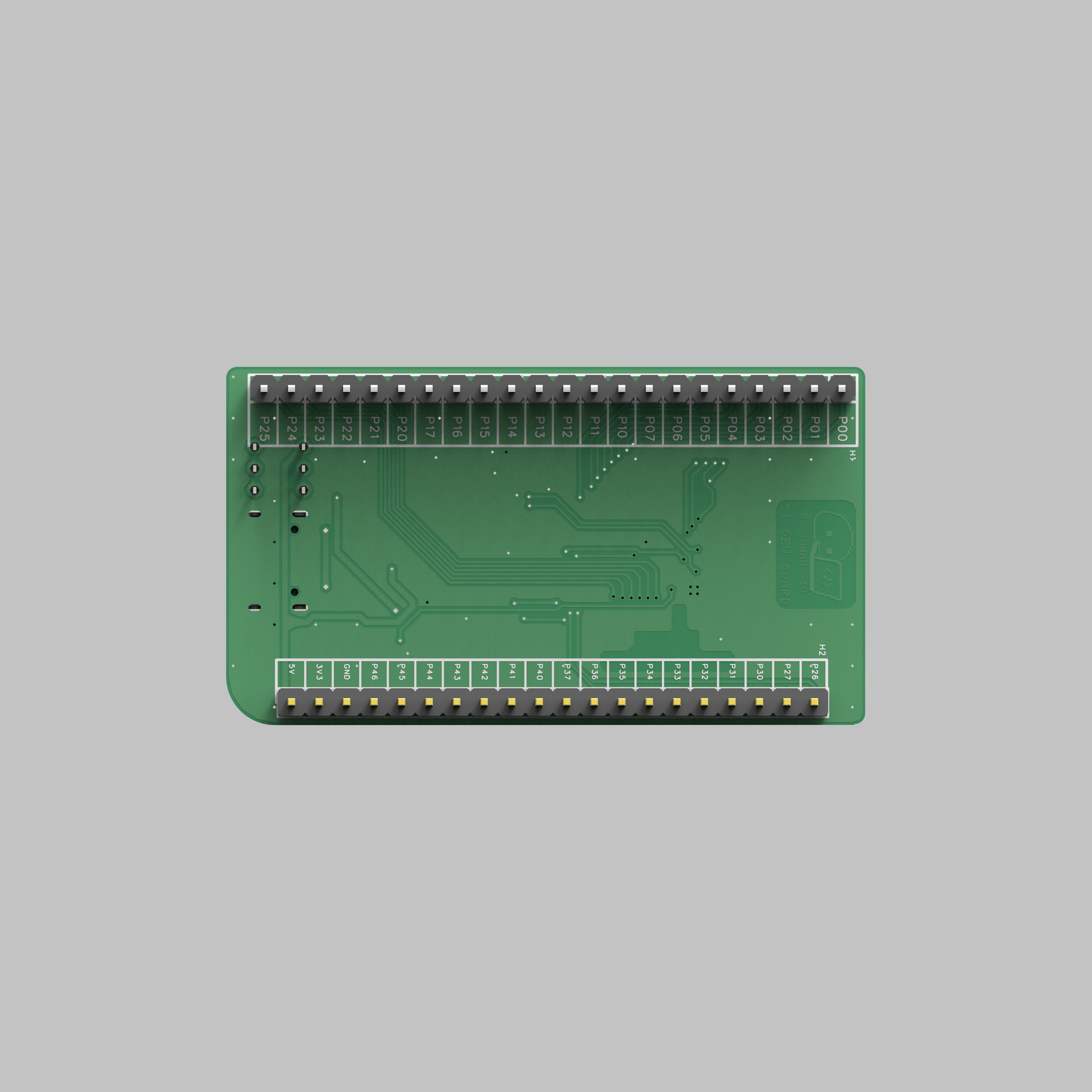
1.Overview
This project is a custom development board built around the STC89C52RC, an 8051-based microcontroller. The goal was to design a compact and practical platform for embedded-system development while gaining hands-on experience with the complete PCB design workflow, from schematic capture and component selection to layout and fabrication preparation.
The board integrates the core circuitry required for standalone microcontroller operation and provides accessible connections for programming, debugging, and peripheral development.
2.Schematic Design
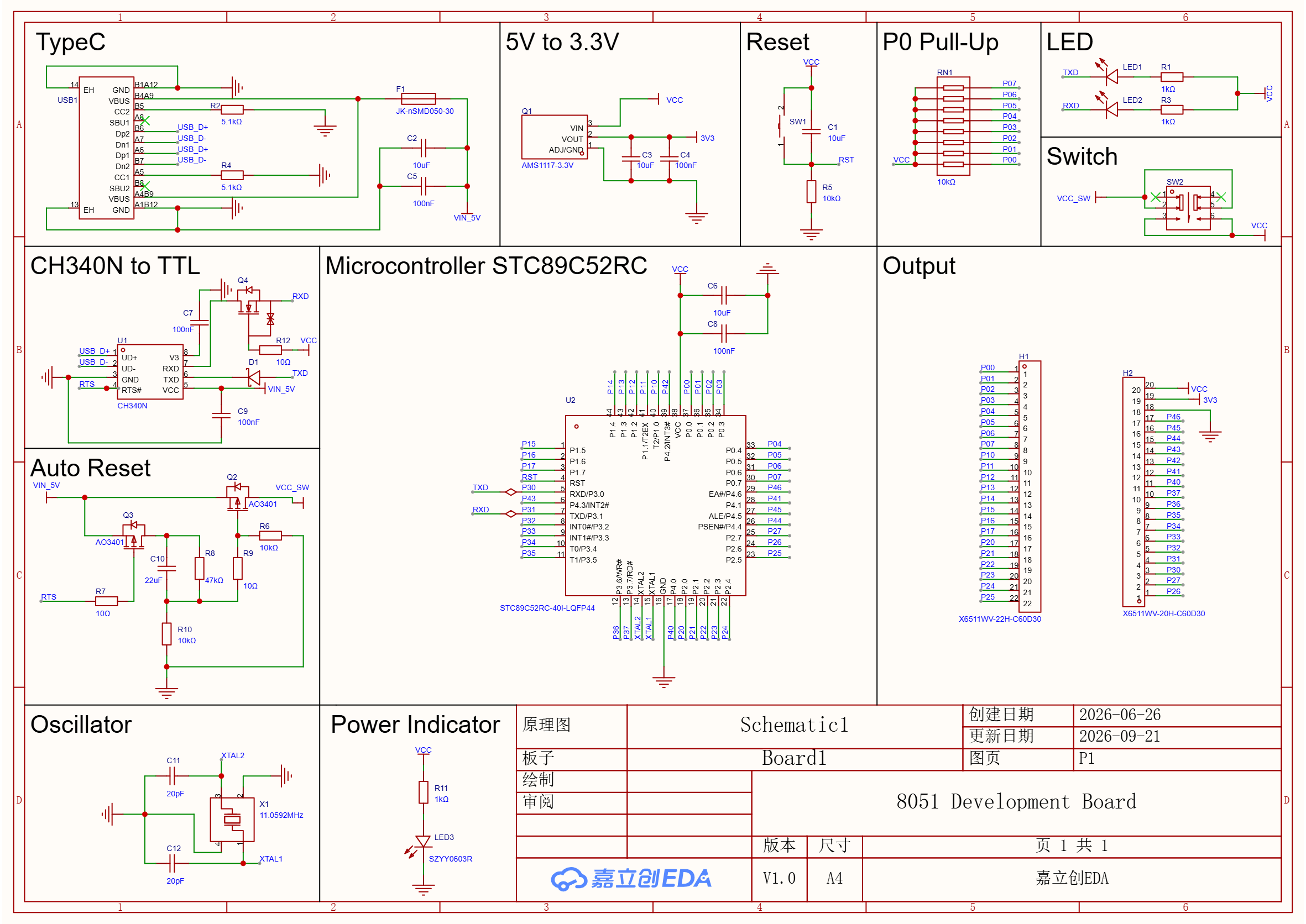
The schematic was designed around the STC89C52RC and its supporting circuitry, including power, clock, reset, programming, and external I/O connections. The circuit was organized into functional blocks to make signal flow easier to understand, verify, and troubleshoot.
Supporting components and interfaces were selected to provide reliable standalone operation while keeping important MCU signals accessible for programming and peripheral development.
3.PCB Layout
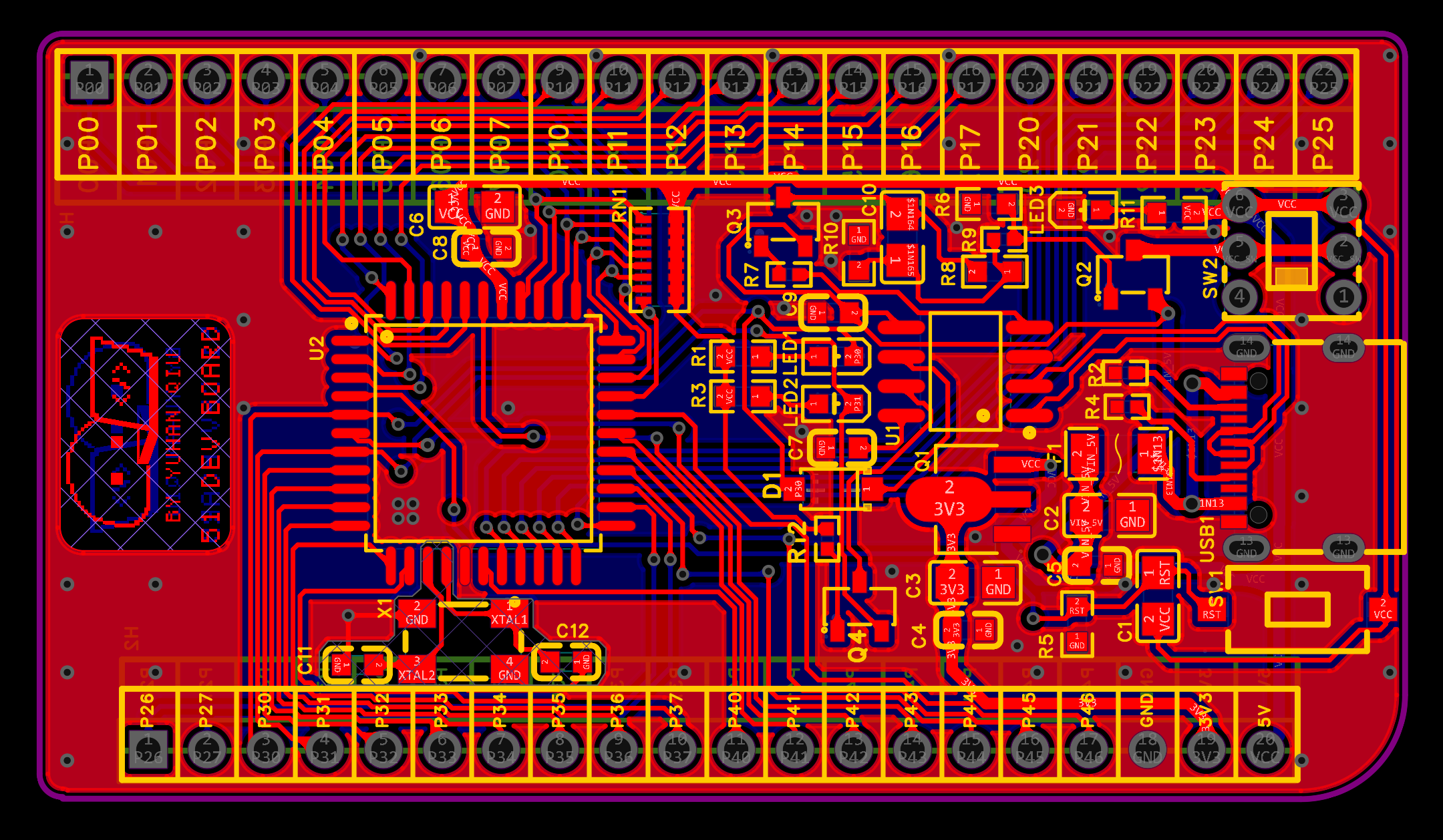
The schematic was translated into a compact PCB layout with component placement organized around the microcontroller and its supporting circuitry. Connectors and user-accessible interfaces were positioned for convenient access, while related components were grouped to simplify routing.
The routing process focused on short signal paths, practical power distribution, and clear organization of the board. Design-rule checks and iterative layout refinement were used to verify manufacturability and reduce potential routing and assembly issues.
4.Final Design
The final PCB provides a compact and reusable platform for 8051-based embedded development. The 3D render was used to verify component orientation, connector accessibility, mechanical spacing, and the overall arrangement of the assembled board before fabrication.
This project strengthened my experience with schematic capture, component and footprint selection, PCB placement and routing, design-rule verification, and preparing a hardware design for fabrication.